Road Salt and De-icers: Protecting a Car Body and Underbody in Winter
What the sand and salt mix does to a car, where rust starts first, how to wash a car in frost and when anti-corrosion treatment is really needed.
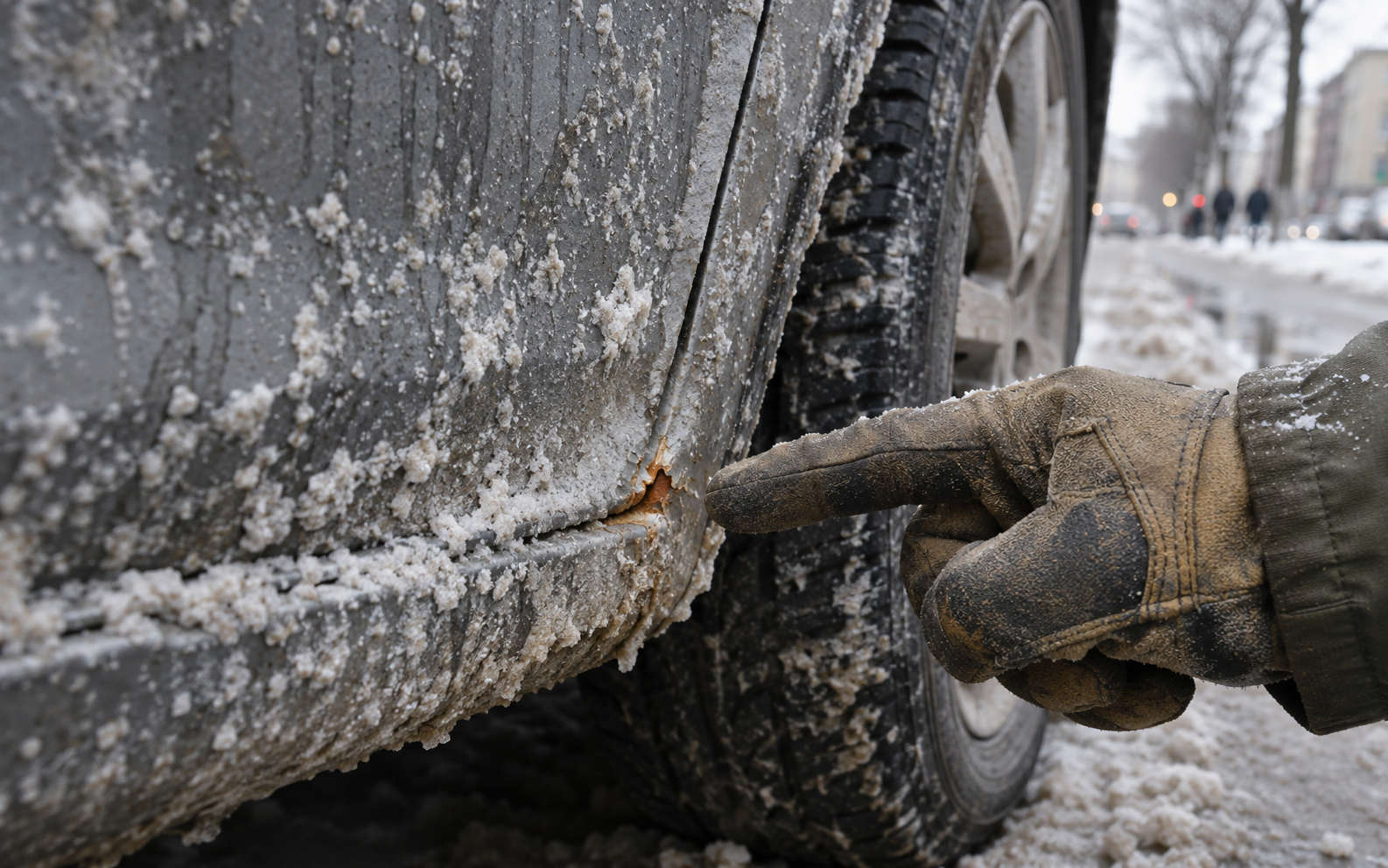
In winter, road services fight icy roads with a sand and salt mix and technical salt. Without them driving would be more dangerous, but safety comes at a price: salt, together with water and dirt, settles on the body, in the wheel arches and on the underbody and speeds up corrosion. In the Brest Region, winter is usually milder than in other regions of the country, and the temperature stays around zero for long periods. For metal this is the worst case: slush of snow and salt does not freeze and stays liquid for days.
How much salt is being prepared for this winter
In October 2026, the Ministry of Transport estimated that road services would need 252,600 tonnes of the sand and salt mix for the whole winter; technical salt is being stocked alongside it (Myfin, October 8, 2026). The standard requires a road to be treated within 6-12 hours on average after it becomes slippery, so there will be salt on highways and streets all winter.
Why salt is most dangerous during a thaw
Dry salt does almost no harm to metal. Corrosion is driven by the solution: water with dissolved salt conducts current well, and where the paint is damaged, iron oxidises noticeably faster than in clean water. Reactions are more active in warmth, so a hard frost in which the dirt on the underbody freezes is easier on the body than a week around zero with wet roads.
The second problem is the sand and fine gravel in the mix. They act as an abrasive: thrown up by the wheels, they chip the paint on the sills, arches and lower edges of the doors and expose the metal. That is why not only washing matters, but also the integrity of the paintwork.
Where rust starts first
- Sills and the lower edges of the doors: dirt is thrown here, and moisture lingers in the seams and drain holes.
- Wheel arches, especially the rear ones, and the places where the arch liner meets the body: wet dirt builds up behind it.
- Welded seams and mounting points on the underbody, the edges of the floor, suspension brackets.
- Brake lines and exhaust mounts: thin metal that is rarely inspected.
- The front edge of the bonnet and the lower part of the windscreen: this is where most stone chips appear.
Before midwinter, it is worth inspecting the car in good light and photographing these areas. In spring you will have something to compare with.
How to wash a car in winter
The main goal of a winter wash is to rinse salt off the underside of the car, not to make it shine. Dust on the roof does almost no harm to the metal, while a salty crust in the arches does damage every day. That is why at a car wash an underbody and arch programme matters more than wax and polish.
- It is most convenient to wash the car during a thaw or in light frost. In hard frost, water freezes in locks, seals and gaps, and a sharp temperature change is bad for glass and headlights.
- After a long trip on a treated highway, do not put off washing for long, especially if warm days lie ahead.
- Do not aim a high-pressure jet point-blank at chips, the edges of protective films or seals: the water strips off flaking paint and gets under the rubber.
- After washing, wipe the seals and door openings dry, blow out the locks, and open and close the doors, boot and fuel filler flap before the water freezes.
- Drive a short distance and brake gently a few times: the brake discs and pads will dry and will not stick while parked.
How often to wash depends on the weather and mileage. In dry frost, a car can safely stay dirty; after a thaw with wet slush on the roads, it is worth washing sooner. The weather forecast for the region's towns is a good guide: if snow and rain are ahead, the wash will not last long; if dry days with light frost are expected, it is the right time to rinse off the salt.
Chips and minor paint damage
Salt speeds up corrosion where the metal is exposed. A small chip on the sill can turn into a rusty patch with blistered paint around it over a single winter. Fresh chips are best touched up with paint matched to the colour code before the frosts: even an untidy patch is better than bare metal. If rust has already appeared, it must be cleaned off, otherwise it will keep spreading under the paint.
A protective coating on the body - wax, polish, ceramic - makes washing easier: dirt and salt do not cling as well to a smooth surface. It does not protect the underbody from corrosion; other products do that job there.
Anti-corrosion treatment: when it is needed
On modern cars, the underbody and hidden cavities are protected at the factory, and a new car usually does not need additional treatment in its first years. It pays off on older cars whose factory layer has worn, and for those who drive a lot on highways in winter. The decision is best made after an inspection on a lift: the mechanic will show where the coating is intact and where rust has already started.
- Treatment is done on a clean and completely dry car, in a warm workshop. A product applied over dirt or moisture traps the salt underneath.
- Rust spots are first cleaned and treated, not simply covered over.
- Brakes, the exhaust system, belts and sensors must be left uncovered.
- It is more convenient to do this before winter or in spring rather than at the height of the season.
- Ask which cavities are treated and through which openings: products for the underbody and for hidden cavities are different.
Workshops offering this service can be found in the vehicle maintenance and repair section of the regional company directory.
Salt inside the car and on the windows
Salt gets onto the mats from shoes. Wet mats raise the humidity inside the car: the windows fog up and frost over on the inside, and water can seep under the carpet to the floor. Rubber mats with a raised edge hold the moisture; it is worth taking them out from time to time, rinsing them and drying them at home.
A salty film on the windscreen turns into cloudy streaks when the wipers are on. Keep a winter screen wash with a good temperature margin in the reservoir and change the wiper blades when they start to leave streaks.
What to check in spring
- Once temperatures stay above zero, thoroughly wash the underbody, arches and sills - at a car wash with a lift or with a dedicated underbody programme.
- Remove the arch liners or look behind them: dirt and salt build up there.
- Inspect the areas you photographed at the start of winter and compare.
- At your scheduled service, ask for the brake lines and exhaust mounts to be checked.
- Touch up new chips and renew the anti-corrosion coating where it is damaged.
It is impossible to protect a car from salt completely, but you can buy time. Regular underbody washing, touched-up chips and a spring inspection slow down corrosion, and small rust spots found in time cost far less than repairing sills and arches.