An Unwanted Gift: How to Return a Purchase in Belarus
Return deadlines, packaging, a lost receipt and online purchases: what to keep, how to contact the seller and where to turn if a dispute arises.
The jumper you received is too small, you dislike the colour of the bag, or you already have the same item. Before going to the shop, keep the packaging and establish the purchase date: a return depends on the condition and category of the goods and evidence of who sold them. The procedure below concerns personal purchases from organisations and individual entrepreneurs in Belarus; purchases from private individuals and craftspeople may follow different rules.
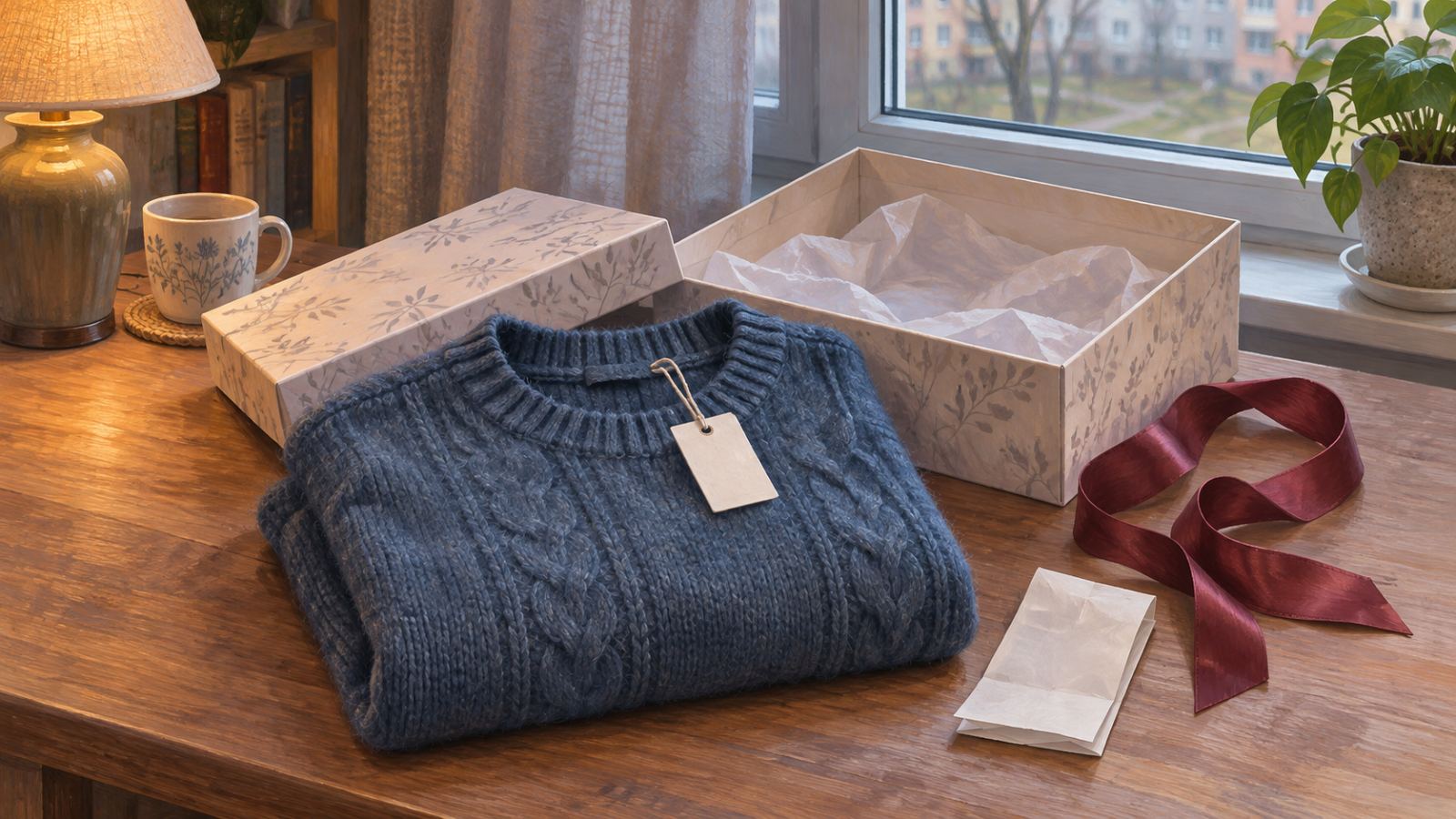
First establish the reason for returning it
An item that is free from defects but unsuitable and an item with a defect follow different return rules. The 14-day period applies to returning non-food goods that are free from defects when the legal conditions are met; it is not a universal deadline for all quality complaints.
The period starts with delivery of the purchase, not the celebration
Under Article 28 of the Consumer Protection Law, non-food goods that are free from defects may be returned or exchanged within 14 days of being handed over to the buyer, unless the seller has announced a longer period. You do not have to accept only an exchange first: the law also provides for a refund when the conditions are met.
If the gift was bought in advance, handing it over on a birthday or at New Year does not restart the period. Ask the giver to establish when the purchase was received and to keep the order or receipt. If the shop offers an extended holiday return period, save the published terms: check which goods and dates they cover.
Check the condition of the item and the exclusions
For an ordinary return, an item that is free from defects must not have been used, must retain its consumer properties and must have evidence linking the purchase to that seller. Goods sold in consumer packaging must be returned in that packaging. Do not confuse it with gift wrapping: keep the original box, inserts and all components, and do not wear or wash clothing.
Before travelling, check the category against the list of goods excluded from exchange and return. It includes, for example, underwear, hosiery and jewellery made from precious metals. Separate conditions apply to technically complex household goods: check the full wording of the list against your particular model.
Do not stop at the category name: some entries in the list have an asterisk and a packaging note. This applies, for instance, to perfumes and cosmetics and to toys: the note makes an exception for certain consumer packaging that allows it to be established that the goods have not been used, including sealed or vacuum packaging. Opening such packaging may affect whether a return is possible; check the rule before unwrapping.
A missing receipt: gather other evidence
Look for an electronic receipt, proof of payment, an order record, a delivery note or a seller document showing the item and its price. The law requires evidence of purchase from that seller; a card debit alone may not show which particular item was bought. Keep the payment details and the order details together.
If you need a statement or card transaction details, contact your bank; contacts are available in the regional bank directory. Ask the giver to help recover the documents and agree the payment refund procedure with the shop in advance, especially if a card belonging to someone else was used. This helps resolve the payment arrangements but does not replace checking whether the item itself qualifies for return.
How to approach the seller and obtain a refund
- Check the deadline, the condition of the item and its category. Photograph the item, packaging and components before handing them over.
- Contact the place of purchase or another return location announced by the seller. Bring the goods with their packaging and evidence of purchase.
- State what you want: a refund or an exchange. In a written request, identify the seller, give your contact details and specify the goods, purchase date, amount and reason for contacting them.
- Keep evidence that the request and goods were handed over: an acknowledgement on your copy, an acceptance document or another confirmation. Do not surrender your only set of documents without making copies.
For goods that are free from defects and returned under Article 28, the refund must be made immediately or, if that is impossible, within 7 days. The payment method is the same as for the purchase unless the parties agree otherwise. Clarify how the refund will be processed and keep the document issued.
The seller may not demand a passport to refund the amount paid unless identity document details were used when the contract was concluded. If the shop demands one in every case, ask it to explain the basis for doing so for your purchase. Do not let the passport discussion obscure the main question: whether the item itself meets the return conditions.
Online shopping: identify your actual seller
The marketplace name, collection point and seller named in the order may refer to different participants in the purchase. Check the order and receipt for the seller's full name, address and complaint contacts. Information disclosure requirements are set out in the distance selling rules; save the seller details and correspondence.
If you received the item from a Belarusian seller, begin by checking the return conditions under the law and the list of exclusions. Ordering online does not in itself mean that any item free from defects may be returned after use. The platform's terms may help with the return procedure, but they cannot reduce rights granted by the applicable legislation.
Before posting the item, agree the recipient's address, handover procedure and delivery cost arrangements, and save the response. Choose a service with confirmation of delivery and keep the receipt; find a nearby branch in the postal directory. If the seller is abroad, do not automatically apply Belarusian deadlines to the purchase: first clarify the applicable rules and dispute procedure with the platform and a consumer protection specialist.
A defect has appeared: make a quality complaint
A faulty fastening, an appliance that does not work or another defect calls for a separate complaint under Articles 20 and 21 of the law. Describe what does not work, when you discovered it and how the item was used; attach photographs and documents. Do not write that you simply dislike the item if the reason is a defect: the wording determines which remedy you are requesting.
Depending on the circumstances, the law provides for replacement, a price reduction, rectification of defects, reimbursement of repair expenses or a refund. Special conditions apply to technically complex and high-value goods, while quality complaint periods depend on the warranty, expiry period and other legal provisions. The expiry of 14 days therefore does not in itself mean that quality complaints are no longer possible.
Defective goods may be returned without consumer packaging. The seller must accept them and, where necessary, check their quality; the consumer has the right to participate in that check. When handing them over, request a document recording their condition, components and your requested remedy; if the cause of the defect is disputed, clarify the expert examination procedure.
If the seller refuses: document the dispute and seek help
Ask for a written explanation of the refusal identifying the rule applied to your goods. Send a written request and keep proof that it was received; attach copies of documents, photographs and correspondence. If you use the post, retain dispatch and delivery information.
In Brest, Baranovichi, Pinsk and the region's districts, you can seek consumer protection advice from the local executive committee: these powers are established by Article 43 of the law. Contacts are collected on the Brest Region executive committees page; before applying, establish which department handles your issue. If you need an individual assessment of a contract or help preparing a court claim, take the collected materials to a lawyer.
A short checklist before returning the item
- The date the purchase was received and the actual seller have been established, rather than just the shop or platform name.
- The reason is clear: an item free from defects is unsuitable, or a defect has appeared.
- The deadline, condition, packaging and return exclusions have been checked.
- Evidence of purchase, photographs and a copy of the request have been kept.
- You know where to hand over the goods and how to obtain proof that the seller received them.
- In the event of refusal, documents are ready for advice from the executive committee or a lawyer.
The most useful step when buying a gift is to keep the documents and establish the return conditions in advance. If the item is unsuitable, do not start using it and do not postpone contacting the seller until the holidays are over.
Sources and materials
- National Centre of Legislation and Legal Information, ETALON-ONLINE: Belarusian Consumer Protection Law, Articles 1, 19-21, 28 and 43 (checked November 19, 2026).
- National Centre of Legislation and Legal Information, ETALON-ONLINE: Council of Ministers Resolution No. 778, Appendix 4 - exchange and return exclusions and the packaging note (checked November 19, 2026).
- National Centre of Legislation and Legal Information, ETALON-ONLINE: Council of Ministers Resolution No. 31 - distance selling rules and information about the seller and platform (checked November 19, 2026).